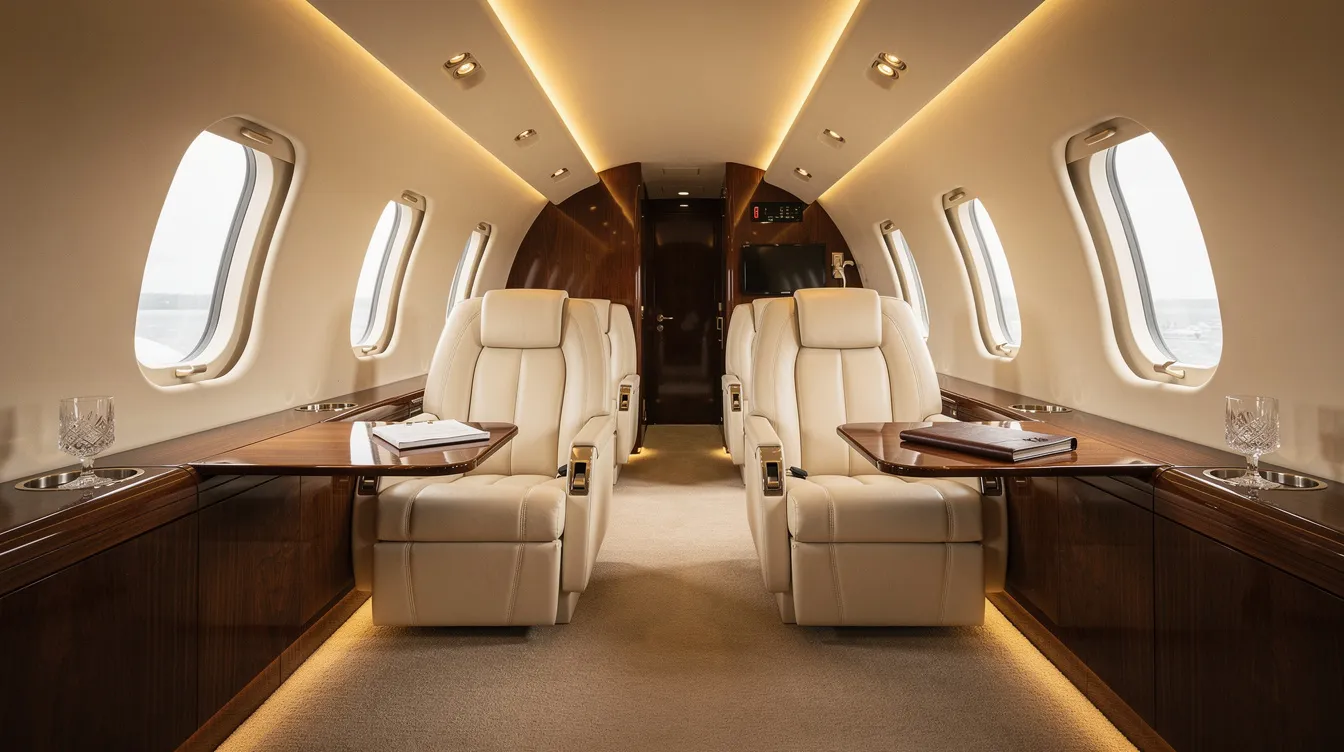
For the executive or high-net-worth traveler evaluating aircraft ownership, understanding current aircraft loan rates is the first step toward a sound capital decision. Here is what the market looks like right now and how financing compares to alternatives like jet cards and charter.
Fast Answer: Typical Aircraft Loan Rates & Monthly Payments in 2026
In mid-2026, most US aircraft loans land in a well-defined range. Here are the numbers that matter:
Typical aircraft loan rates range from 6.25% to 8.99% APR for qualified borrowers. Premium profiles with excellent credit can see low rates near the bottom of that band, while higher-risk borrowers push above 9%.
Loan terms for aircraft financing usually range from three to ten years, though certified piston and turboprop aircraft can stretch to 15–20-year amortizations. Business jets commonly fall in the 7–15 year range.
Private aircraft loans typically require a 15% to 20% down payment. Larger or older aircraft often demand 20%+ down.
A $1,000,000 aircraft loan at 7.25% APR over 15 years with 20% down ($200,000) yields monthly payments of approximately $7,135–$7,200. A $75,000 aircraft loan at 6.99% APR has a monthly payment of $1,484.94. Taxes, aviation insurance, and operating costs sit on top of these figures.
To estimate your own payment, plug your loan amount, interest rate, and term into any online loan calculator before engaging aviation lenders. Borrowers should estimate the total cost of ownership, including operational expenses beyond the loan itself.
While BlackJet focuses on jet cards and private jet access rather than direct aircraft loans, understanding current rates helps clients compare full aircraft ownership against membership.
How Aircraft Loan Rates Work (and What Drives Them)
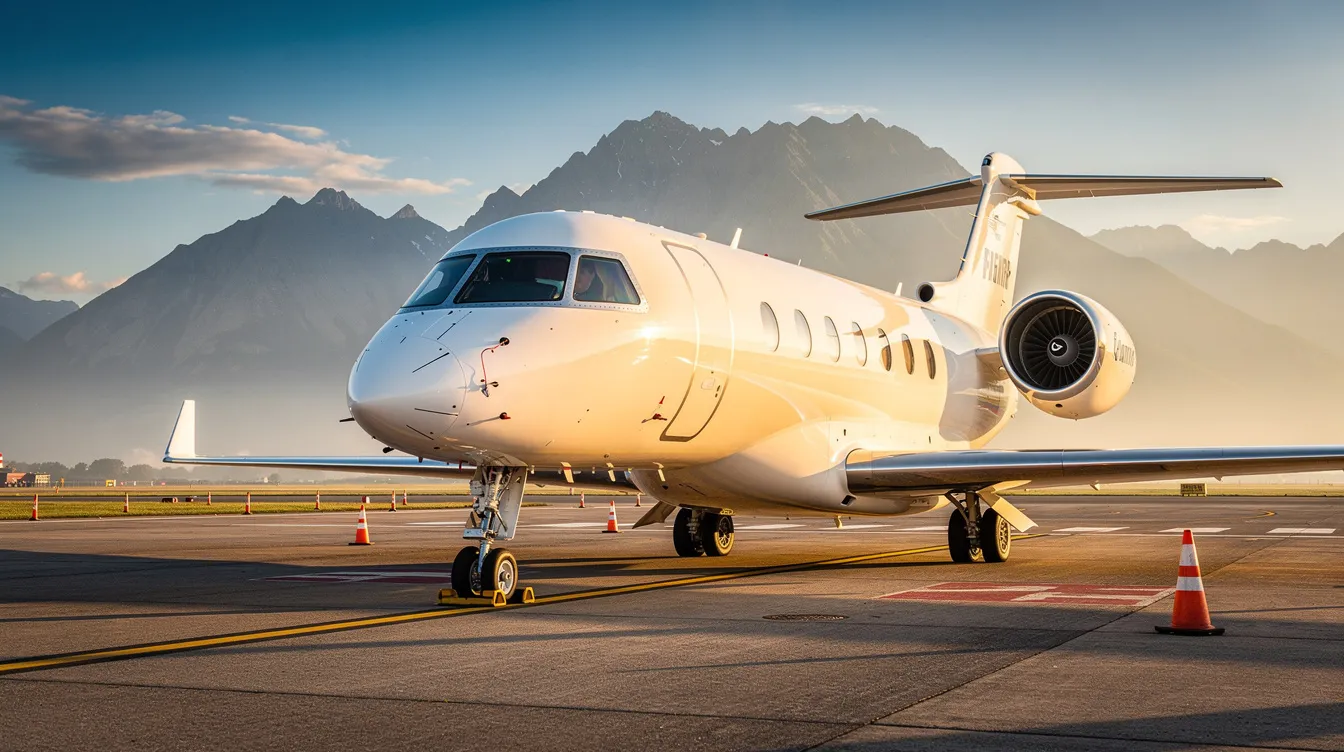
An aircraft loan is a secured loan where the private aircraft serves as collateral, typically used under Part 91 (personal or business use) or Part 135 charter operations. Aircraft loans are generally priced using a benchmark rate plus a lender spread, which means several factors determine where your rate falls:
Federal Reserve and macroeconomic conditions. Aircraft financing rates are influenced by Treasury yields, SOFR, and broader market rates. Early 2026 saw declines in aircraft loan interest rates compared to 2024–2025.
Credit profile. Lenders typically require a credit score of 740 or higher for competitive rates. Borrowers in the 720+ band access mid-6% APRs; those in the 680–719 range see 7.5–9%; sub-680 profiles face rates above 9%. Credit approval hinges on liquidity, income stability, and debt ratios.
Aircraft type and age. Newer aircraft under 10 years old usually qualify for better interest rates and loan-to-value ratios than older models. Experimental aircraft attract shorter loan terms and higher rates due to resale complexity.
Loan amount and structure. Larger loans above $1M sometimes achieve a competitive rate but require stricter underwriting and higher down payments. Aircraft loans can be fixed or floating rate options. Asset-based loans may not require personal financial disclosures.
Usage and pilot qualifications. Personal use aircraft often receive more favorable financing structures than commercial planes. Lenders evaluate pilot qualifications, including flight hours and ratings as part of risk assessment, and some also offer loan or refinance options for licensed pilots still paying off flight training. Part 135 charter use adds scrutiny around revenue projections and insurance.
Typical Loan Terms, Down Payments, and Monthly Payments
Loan terms shape your cash flow as much as the interest rate itself. Here is what to expect by aircraft class:
Single- and twin-engine piston: often 15- 20-year amortization for newer certified models.
Turboprops: commonly 12–20 years depending on age, price, and engine program eligibility.
Light and midsize jets: usually 7–15 years, with stricter residual value assumptions.
Loan terms for aircraft financing typically range from 5 to 20 years across these categories. Specialized lenders require a down payment between 15% and 20%, and a larger down payment typically reduces lender risk and can improve pricing. Some lenders finance 100% of the aircraft purchase price, though this is rare and reserved for exceptionally strong borrowers.
Payment examples:
$500,000 aircraft: 15% down ($75,000), financed $425,000, 7.49% APR, 15-year term → approximate monthly payments of ~$4,017. Total interest over the life of the loan: roughly $222,000–$230,000. Understanding your plane ownership cost means accounting for this and more.
$3,000,000 light jet: 20% down ($600,000), financed $2,400,000, 7.00% APR, 10-year term → monthly payment around $28,000–$29,000. Cash outlay at closing: $650,000–$700,000, including costs.
Adjust any variable in a loan calculator—purchase price, down payment, APR, term—to see how your payment and total cost shift.
Aircraft Loans vs. Jet Cards and Charter: Strategic Use of Capital
For many BlackJet clients, the real question is not which loan officer to call but whether aircraft ownership makes sense at all versus a jet card or on-demand charter. The capital implications are stark.
Ownership demands:
Hundreds of thousands to millions in upfront equity via down payment, plus closing costs and reserves.
Ongoing principal and interest payments regardless of flight hours, plus hangar, crew, insurance, and maintenance.
Exposure to residual value risk when you eventually sell the airplane. Leasing allows you to avoid depreciation costs at lease end, but leases carry their own constraints.
A BlackJet Jet Card offers:
Prepaid blocks of flight hours (e.g., 25-hour or 50-hour programs) with zero debt obligations.
No aircraft loan, hangar fees, crew salaries, or maintenance reserves. No vehicle to depreciate on your account.
Ability to select cabin classes and aircraft categories per trip rather than being locked into one specific aircraft.
Scenario: A business executive flying New York–Miami 25 times per year could finance a light jet at ~$350,000+ annually in debt service alone—before operating costs. A BlackJet Jet Card covering similar hours might cost a fraction of that, with funds staying invested elsewhere.

The Aircraft Financing Process: From Application to Closing
Beyond rates, the application process itself can be complex for first-time buyers. Here is the typical sequence:
Free quote and pre-qualification. Contact aviation lenders for indicative rates without a full application. Pre-approval helps improve negotiating power with sellers in the aircraft market.
Formal application. Submit financial documents-tax returns, bank statements, details on the intended plane and usage. Documents needed can be found in a lender's pre-flight checklist. The borrower provides specifics on the new aircraft or specific aircraft under contract.
Credit review and approval. Lenders review the aircraft's age, market value, and maintenance logs when evaluating loans. Loan approval can occur within 48 hours; processing time generally takes up to 30 days.
Due diligence. Comprehensive logbook review, AD compliance checks, and a pre-buy inspection by an independent maintenance facility. Title search and registration checks clear any liens on the transaction.
Escrow and closing. An escrow company holds deposit funds, coordinates paperwork between buyer, seller, lender, and FAA, and manages payoff of existing liens. Closing and funding can happen on the same day for straightforward deals. More complex jet and cross-border transactions may take longer.
Special Considerations: Experimental Aircraft, Older Airframes, and Part 135 Use
Not all aircraft are viewed equally by the right lender. Certain categories affect available loan terms and the interest rate you receive.
Experimental aircraft. Many mainstream aviation lenders either avoid them or offer shorter terms and rates starting at 7.5–9%+. Build quality documentation, a reputable kit manufacturer, and thorough inspections are essential. Small aircraft in this category face the most scrutiny.
Older airframes (25–30+ years). Expect reduced amortization lengths, higher down payments, and maximum age-at-maturity limits. Other factors like parts obsolescence and engine overhaul status affect pricing.
Part 135 use. Charter operations require additional scrutiny of revenue projections, operating agreements, and a possible separate LLC ownership structure. More stringent insurance requirements and regulations apply.
Insurance and safety. Required hull and liability limits must meet lender minimums. Aircraft maintained to rigorous safety standards earn better terms—a principle BlackJet applies across its own fleet.
Common Questions About Aircraft Loans and Rates
Here are common questions prospective borrowers ask when evaluating the current environment:
How often do aircraft loan rates change? Rates move with benchmark rates. Most lenders allow you to lock a rate when the term sheet is signed, subject to closing within a specified window.
What credit score do I need? A score of 740+ typically unlocks the best current rates. Mid-tier credit (680–719) is workable but at a higher APR.
Can I refinance my aircraft loan? Yes, if rates fall. Check your contract for prepayment penalties—some loans include them, others allow prepayment without penalty.
Does a jet card make an aircraft loan unnecessary? It depends on usage. If you fly fewer than 200–300 hours per year, paying for a jet card rather than carrying a mortgage on an airplane often makes financial sense.
Can I charter my financed aircraft to offset monthly payments? Yes, but this requires Part 135 certification, higher insurance, and exposes you to wear and regulatory costs.
Should I hold the aircraft personally or in an LLC? Many lenders prefer entity ownership for taxes and liability reasons. Consult your CPA and legal advisors—an equal housing lender or standard bank may not offer the same flexibility as specialized aviation lenders in this regard.
How BlackJet Fits Into Your Aircraft Ownership Strategy
BlackJet is a premier private aviation company offering jet cards and charter designed for travelers who want the benefits of private flight without the complexity of aircraft financing and ownership. Whether you are a current owner or considering a purchase, BlackJet serves as both an alternative and a complement.
Safety. BlackJet's proprietary certification standards and third-party audits exceed minimum lender and regulatory expectations, giving customers confidence in every flight.
Sustainability. Every BlackJet journey is carbon neutral at no extra cost-something that is far more complex to manage as a sole owner of a plane.
Technology. Mobile booking tools and real-time support let you compare the cost of each trip against your hypothetical ownership cost per hour, giving you the details you need to make informed decisions.
Example: A company that considered financing a midsize jet for $5 million—tying up $1M+ in a down payment and carrying substantial annual debt service-instead opted for a BlackJet Jet Card. The result: millions in capital preserved, private jet access maintained, and zero exposure to residual value risk.
Discover how BlackJet can reshape your travel strategy. Explore our Jet Card programs or speak with a BlackJet advisor to benchmark aircraft loan costs against seamless, prepaid private jet access.


 Regístrate con Google
 Regístrate con Apple